10 Jun 2026
Inside the Mechanics of Matched Stakes and Variable Lines During Cup Runs and Autumn Meetings

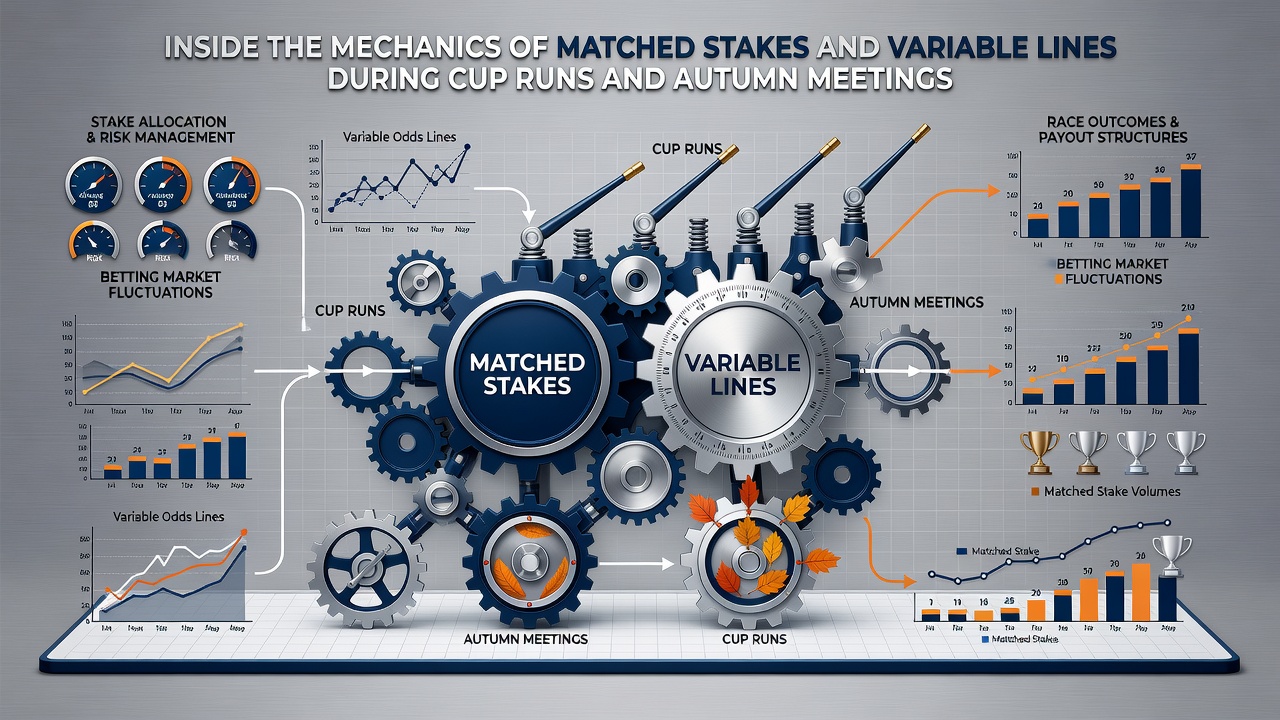
Matched stakes operate as a core component of betting market operations where bookmakers align opposing positions to balance their books during periods of intense activity such as cup competitions and autumn racing calendars. Operators calculate exposure by matching customer stakes on both sides of a wager, which reduces overall risk while allowing lines to fluctuate based on real-time demand. Data from industry tracking services shows these adjustments occur most frequently when volume spikes in knockout formats or seasonal fixtures that draw concentrated public interest.
How Matched Stakes Function in Practice
Bookmakers establish initial prices and then recalibrate them as bets arrive from different customer segments, with matched stakes acting as the buffer that prevents one-sided liability from building up. In cup runs, early rounds often feature lower-division teams against established clubs, and this setup triggers rapid stake matching because bettors favor the favorites while a smaller group backs the underdogs at longer prices. The process relies on algorithms that scan incoming wagers and redistribute risk across multiple markets, including match result, handicap, and total goals, all within the same event. Observers note that this matching occurs continuously rather than in isolated blocks, which keeps the overall position stable even when one outcome attracts disproportionate support.
Variable Lines and Their Drivers
Variable lines emerge when odds or point spreads shift in response to stake flow, team news, or external factors such as weather conditions at autumn race meetings. Lines move because operators must account for new information that changes the perceived probability of outcomes, and the movement itself becomes part of the market signal that later bettors interpret. During autumn fixtures on all-weather tracks or turf courses preparing for winter jumps, variable lines often widen or narrow depending on ground conditions reported on race day. Figures from European betting exchanges indicate that line movement accelerates in the final hours before post time when late money enters the market and forces further matching adjustments.
Application During Cup Runs
Cup competitions create distinct patterns because single-elimination formats compress decision windows and increase the frequency of line changes. Matched stakes become particularly visible when public money concentrates on one side early, prompting operators to shorten the favorite while lengthening the underdog to attract balancing action. In domestic cup ties, midweek replays or extra-time scenarios add further layers as markets reopen and lines reset based on fresh stake distribution. Those who monitor these movements track both the initial opening price and subsequent adjustments, noting that matched volumes often exceed initial projections when a lower-league side produces an upset. Research compiled by academic groups studying sports markets shows that cup environments generate higher volatility in line movement compared with regular league schedules because of the binary nature of advancement.
Variable lines in these settings also reflect squad rotation decisions announced close to kickoff, which forces rapid re-matching of stakes across multiple outcome categories. Operators maintain separate risk pools for each market yet link them through overall exposure limits, so a heavy matched stake on one outcome can indirectly influence pricing in related bets. This interconnected approach helps stabilize the book across an entire round of fixtures rather than treating each match in isolation.
Patterns Observed in Autumn Meetings
Autumn racing calendars introduce additional variables through changing ground conditions and the transition from flat to jumps seasons, which affects how matched stakes and lines interact. Handicappers release official ratings that serve as reference points, yet variable lines diverge from those benchmarks once early betting establishes actual market sentiment. Matched stakes on ante-post markets for major autumn targets often carry over into the day of the race, with operators adjusting final prices to reflect late withdrawals or non-runners. Industry reports from North American racing authorities highlight that similar mechanics appear in graded stakes events where public support for certain trainers or jockeys drives line movement independent of official assessments.
During autumn meetings, bookmakers frequently open multiple lines on the same race covering win, place, and each-way options, then match stakes across these tiers simultaneously. The result is a layered structure where movement in the win market can trigger corresponding shifts in place prices to maintain overall balance. Data collected by university research teams examining pari-mutuel versus fixed-odds systems demonstrates that these adjustments occur faster in fixed-odds environments because operators bear direct responsibility for balancing the book rather than relying on pool totals.
Regulatory Context and Market Stability
Regulatory frameworks in various jurisdictions require operators to maintain transparent records of stake matching and line adjustments, which contributes to market integrity during high-volume periods. Authorities in Australia and Canada have issued guidelines on real-time disclosure of significant line movements to prevent information asymmetry between operators and customers. These rules intersect with operational practices because matched stakes must remain within defined exposure thresholds that regulators monitor through periodic audits. The outcome is a system where variable lines reflect both commercial decisions and compliance obligations rather than operating in an unregulated vacuum.
Conclusion
Matched stakes and variable lines form interconnected elements that shape pricing and risk management throughout cup runs and autumn meetings. Operators rely on continuous matching to limit exposure while lines respond to incoming information and stake distribution. The mechanics remain consistent across different event types even as the specific triggers, such as squad changes or ground reports, vary by competition. Ongoing developments in data processing continue to refine how these adjustments occur, yet the fundamental requirement to balance opposing positions stays central to operations in both football and racing markets.